KUM Services GmbH · Germany · On-Site Worldwide
Drone Aircraft Conversion — Process, Timeline & Cost
How a Conversion Programme Works
From Civil Airframe to Operational Drone — Step by Step
What does a drone aircraft conversion programme actually look like — how long does it take, and why does it cost less than a purpose-built system? KUM Services GmbH (Germany) runs a structured, five-phase programme: a proven civil turboprop or turbofan airframe is sourced on the open market at a known market price, engineered and modified, fitted with autonomous flight systems, ground tested, and flight tested — all on-site at the customer's location, anywhere in the world. This page walks through each phase, the timeline advantage over multi-year purpose-built UAV programmes, and the total cost-of-ownership case.
Timeline & Cost
Months, Not Years. Known Market Prices.
A purpose-built UAV programme carries years of development risk and non-recurring engineering cost before the first aircraft flies. A KUM Services conversion inverts that equation: the starting point is an aircraft that already flies — a Cessna 208, King Air 350, Pilatus PC-12, Citation 525B, or C-130J — acquired on the open civil market at a transparent, known market price. Conversion is completed on-site at the customer's facility by EASA Part-145 certified technicians in a fraction of the time of a clean-sheet programme, and the aircraft benefits from global civil spare-parts availability and established maintenance networks for its entire service life.
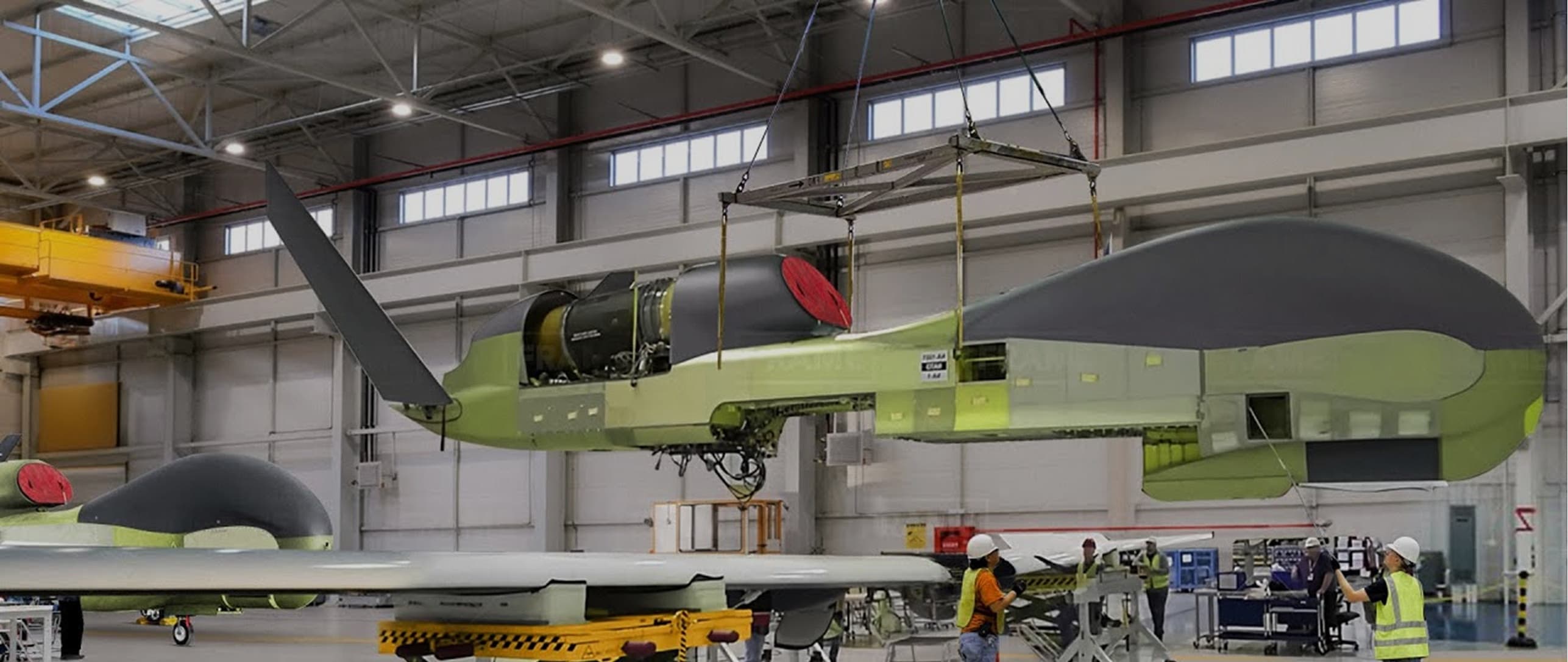
The Conversion Programme
Five Phases to Handover
Airframe Sourcing
A proven civil turboprop or turbofan airframe is selected and acquired on the open civil aviation market at a known market price. Condition and maintenance history are verified before purchase, and baseline maintenance is completed by EASA Part-145 engineers.
Engineering & Modification
The airframe is prepared for autonomous operation: structural provisions, wiring, actuation interfaces, and mission-system fittings are engineered and installed against a documented modification plan, preserving the aircraft's certified maintenance baseline.
Autonomous Systems Installation
Autonomous flight control systems, BVLOS-capable datalinks, mission payloads for ISR, cargo, or special missions, and the ground control station are installed and calibrated to the specific airframe.
Ground Testing
Every system is exercised on the ground before flight: flight control end-to-end checks, datalink range and failover verification, payload functional testing, and ground control station rehearsals with the customer's operators.
Flight Test & Handover
A structured flight test campaign validates autonomous operation across the mission envelope. The programme closes with handover: operator training, full technical documentation, and continuing worldwide support from EASA-certified engineers.
Why Conversion Wins
The Timeline & Cost Advantage
Short Programme Timeline
The programme starts from a flying aircraft, not a design study. Compared with purpose-built UAV programmes that can take years from contract to first flight, a conversion delivers operational capability in a fraction of the time.
On-Site, Worldwide
Conversion takes place at the customer's own facility, anywhere in the world. No aircraft transfers between contractor sites, no waiting for factory slots — the airframe remains under the customer's control throughout.
Known Acquisition Cost
Civil airframes trade on an open, liquid market with published price levels. There are no non-recurring engineering charges to amortise across a small fleet, and fixed-price proposals cover acquisition, conversion, and mission-system integration.
Lower Cost of Ownership
Global civil spare-parts availability, established maintenance networks, and EASA Part-145 procedures keep lifecycle cost substantially below purpose-built drone platforms — for ISR, cargo, and special-mission operations alike.
Related Services
Explore HPAA Capabilities
Autonomous Aircraft Germany
Overview of the civil-to-autonomous aircraft conversion service and platform family.
Robot Aircraft Germany
The technology stack behind conversions — flight control, datalinks, and autonomy systems.
Unmanned Aircraft Germany
Certification and airspace considerations for converted unmanned aircraft.
Autonomous Platform Aircraft Germany
Platform options and payload configurations for ISR, cargo, and special missions.
Contact
Scope Your Conversion Programme
KUM Services GmbH — fixed-price drone conversion programmes delivered on-site, worldwide, for defence ministries, government agencies, and special-mission operators.