KUM Services GmbH · Germany · Worldwide Delivery
Autonomous Platform Aircraft — Airframes & Payload Integration
Match the Airframe to the Mission
Which Platform Fits Your Mission?
Every successful autonomous aircraft programme starts with two engineering decisions: the right airframe and the right payload fit. KUM Services GmbH converts five proven civil airframes — from the light-utility Cessna 208 Caravan to the heavy-lift C-130J — into autonomous platforms, then integrates the sensors, communications, and cargo systems the mission demands. This page explains how the platforms differ, how payload integration works, and how a single aircraft can be reconfigured across ISR, cargo, communications relay, and special-mission roles. Engineered in Germany; delivered to operators worldwide.
Platform Selection Logic
Endurance. Altitude. Payload.
Airframe choice is a trade-off. Lighter turboprops such as the Cessna 208 and Pilatus PC-12 offer long loiter times, austere-field access, and a small logistical footprint — at the cost of payload volume. The King Air 350 balances altitude, endurance, and cabin space for multi-sensor ISR fits. The Citation 525B trades loiter time for jet speed and higher operating altitude, reaching distant mission areas quickly. The C-130J stands apart as the heavy option where payload mass and internal volume dominate the requirement. KUM Services assesses the mission profile first — station time, sensor suite, cargo load, transit distance — then recommends the airframe, rather than the other way around.

The Airframe Portfolio
Five Platforms, Five Mission Classes
Each airframe in the KUM Services portfolio occupies a distinct point on the endurance–altitude–payload envelope. All are sourced from the open civil market with verified reliability records and global spares support.
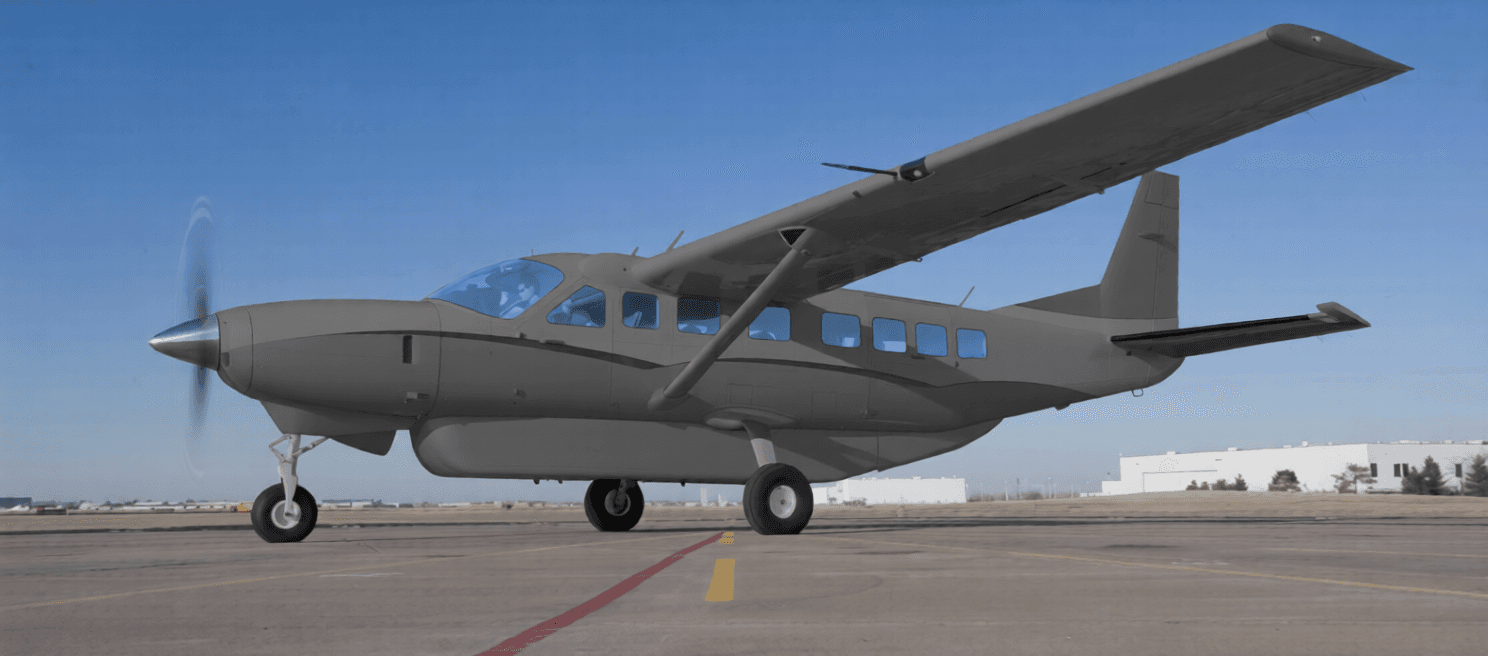
Cessna 208 Caravan — Light Utility
The entry point to autonomous operations. Long loiter at low operating cost, short and unpaved field capability, and a cabin suited to a single primary sensor or light cargo. Best for single-sensor ISR and light resupply missions with minimal ground infrastructure.
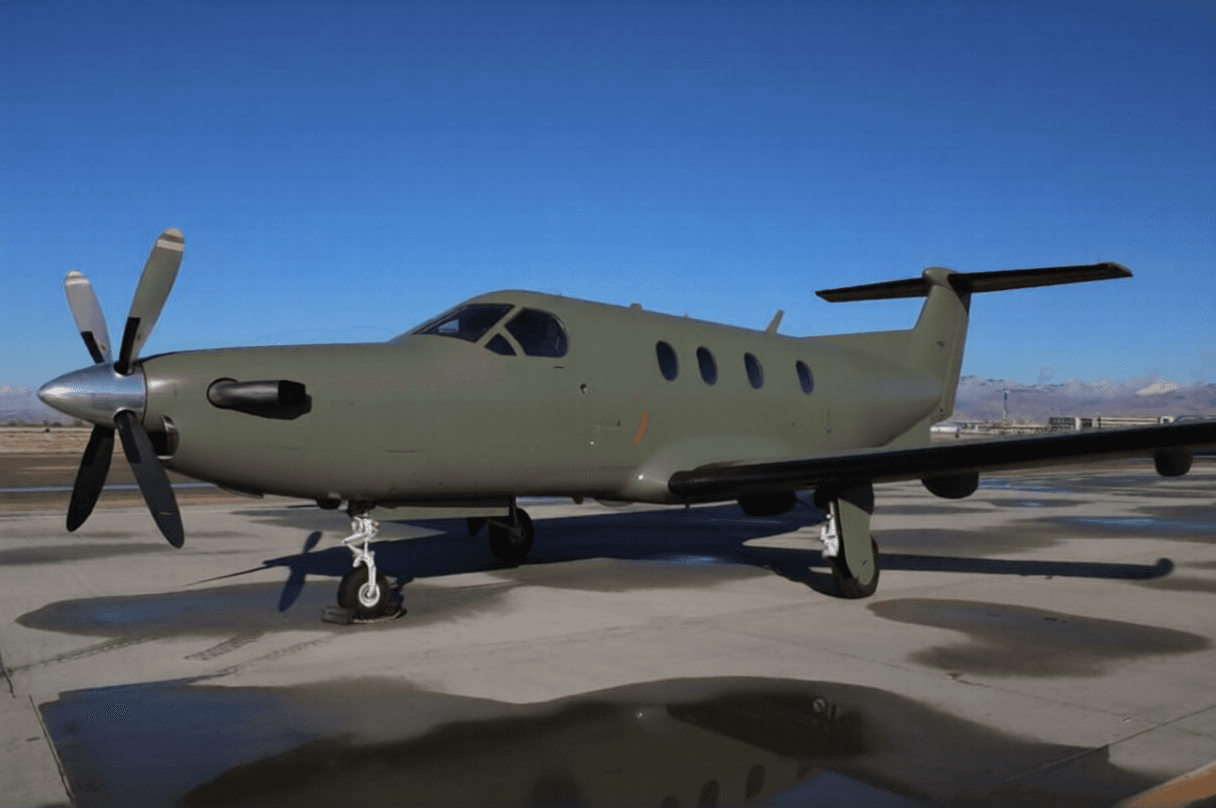
Pilatus PC-12 — Versatile Single Turboprop
A step up in speed, range, and cabin volume while retaining single-engine economy and austere-field access. Its large cargo door supports flexible payload installation — a proven special-mission platform for ISR, light cargo, and communications relay in remote environments.
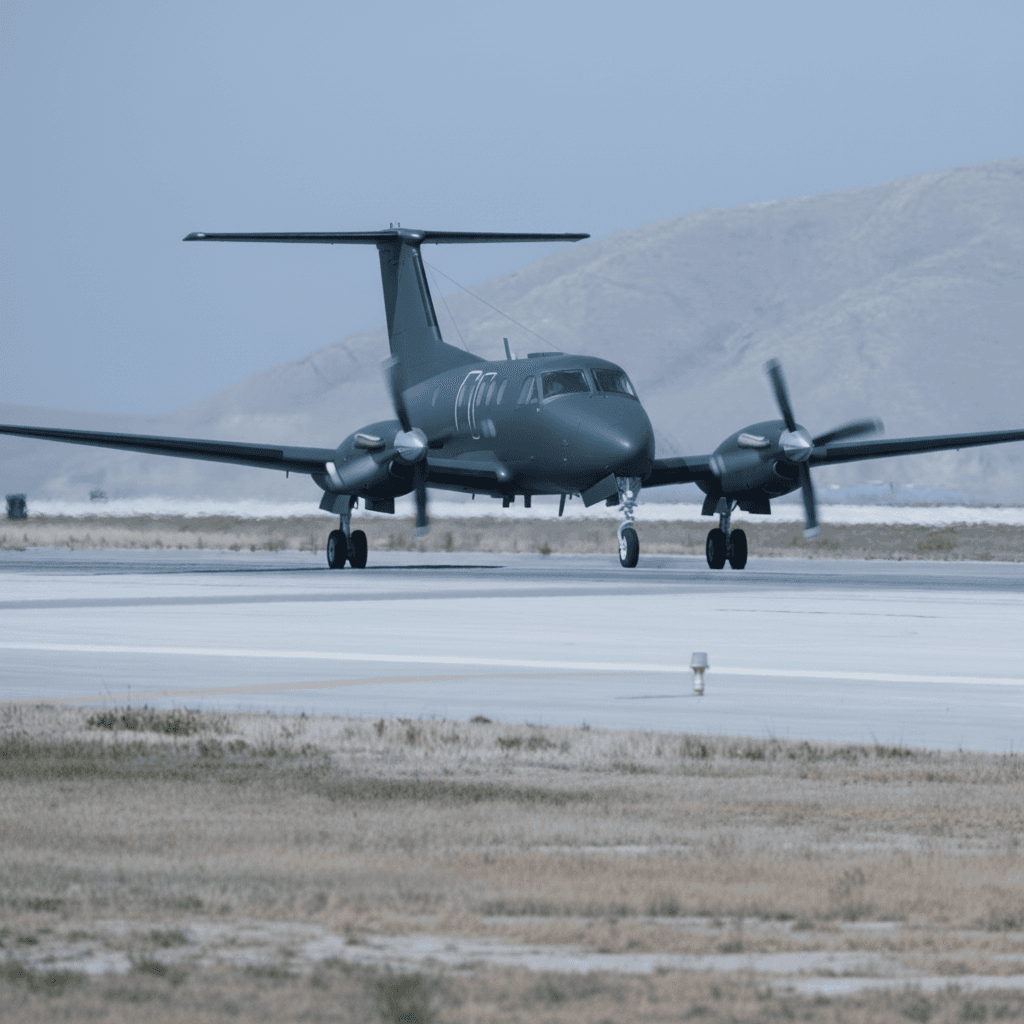
Beechcraft King Air 350 — Medium ISR
The benchmark medium ISR airframe worldwide. Twin-turboprop redundancy, high-altitude endurance, and cabin space for EO/IR, SAR, and signals payloads operating simultaneously. The default recommendation for persistent multi-sensor surveillance.
Cessna Citation 525B — High-Speed Jet
Jet transit speed and higher operating altitude for missions where reaching the area quickly matters more than loiter time — wide-area maritime patrol, rapid-response ISR, and high-altitude communications relay over extended distances.
C-130J Super Hercules — Heavy Lift
The heavy end of the portfolio. Maximum payload mass and internal volume, a rear cargo ramp for palletised aerial delivery, and the endurance for strategic-scale autonomous cargo, large-area ISR, and long-duration relay missions.
Payload Integration
What the Platforms Carry
Payloads mount through standardised mechanical, power, and data interfaces engineered into each conversion. Integration is validated on the ground and in flight before handover.
EO/IR & SAR Sensors
Stabilised electro-optical and infrared turrets for day/night imaging, paired with synthetic aperture radar for all-weather, wide-area mapping. Sensor selection is matched to the airframe's power and volume budget.
Communications Relay
Airborne relay packages that extend line-of-sight datalinks and radio networks across terrain and distance — turning the autonomous platform into a persistent node above the operating area.
Cargo & Airdrop Systems
Internal cargo restraint, GPS-guided parachute delivery, and direct-landing resupply configurations. On the C-130J, ramp-based palletised airdrop supports autonomous delivery at scale.
Mission Computers
Onboard processing that fuses sensor feeds, manages payload tasking, and pushes actionable products over the BVLOS datalink to the ground control station — reducing bandwidth demand and operator workload.
Multi-Role by Design
One Airframe, Many Missions
Because payloads attach through common interfaces, a converted platform is never locked into a single role. An ISR-configured King Air 350 can be refitted as a communications relay; a Caravan can swap its sensor turret for a cargo delivery fit. Reconfiguration is performed as a maintenance-level task under EASA Part-145 certified procedures by our partner Part One-Forty Five GmbH — supported by autonomous flight control expertise from the Institute of Flight Mechanics and Flight Control (iFR) at the University of Stuttgart. For operators, this means a small fleet covers a broad mission set, and payload roadmaps can evolve without new airframe programmes.
Related Services
Explore HPAA Capabilities
Autonomous Aircraft Germany
The programme overview — why civil-to-autonomous conversion beats purpose-built development.
Robot Aircraft Germany
The technology stack — flight control systems, autonomy software, and BVLOS datalinks.
Unmanned Aircraft Germany
Certification and airspace — how converted aircraft are approved and operated.
Drone Aircraft Conversion Germany
The conversion process — from airframe sourcing to on-site handover, step by step.
Contact
Find the Right Platform and Payload
Tell us your mission profile — station time, sensors, cargo, transit distance — and KUM Services GmbH will recommend the airframe and payload fit. Serving defence ministries, government agencies, and special-mission operators worldwide from Germany.